

Fabric decides how a garment ages, and aging decides whether it stays
Fabric determines how a garment ages, and aging determines whether a piece stays in your wardrobe. What follows is how common materials behave over time, what care actually changes, and how to read sustainability claims without taking them at face value.
Nazso does not sell clothing and has no certification to promote. This is practical information about fibers, washing, storage, and the language brands use when describing materials — written so you can compare two garments on the same rack and know which one will still be there in three years.
Wool, cotton, linen, and how they age
Wool holds shape and resists odor, which is why it dominates tailoring and knitwear. It also felts when exposed to heat and agitation, so washing decisions matter enormously. Cotton is more forgiving and more prone to losing shape at the neckline and cuffs. Linen creases by nature, which is a property rather than a defect, and softens with repeated wear.
Knowing these behaviors changes how you shop. A wool coat that fits well can last many seasons if it is cleaned rarely and correctly. A cotton tee that fits well may last a year of heavy rotation. Neither is a problem, as long as you know which one you are buying.
What to check in the fitting room
- Pull the neckline gently. Cotton that gives immediately will keep giving.
- Fold a sleeve and let it fall. Wool springs back; a limp fold means a low-twist yarn.
- Hold linen up to the light. Even weave is what lets it soften rather than split.

Denim: weight, wash, and longevity
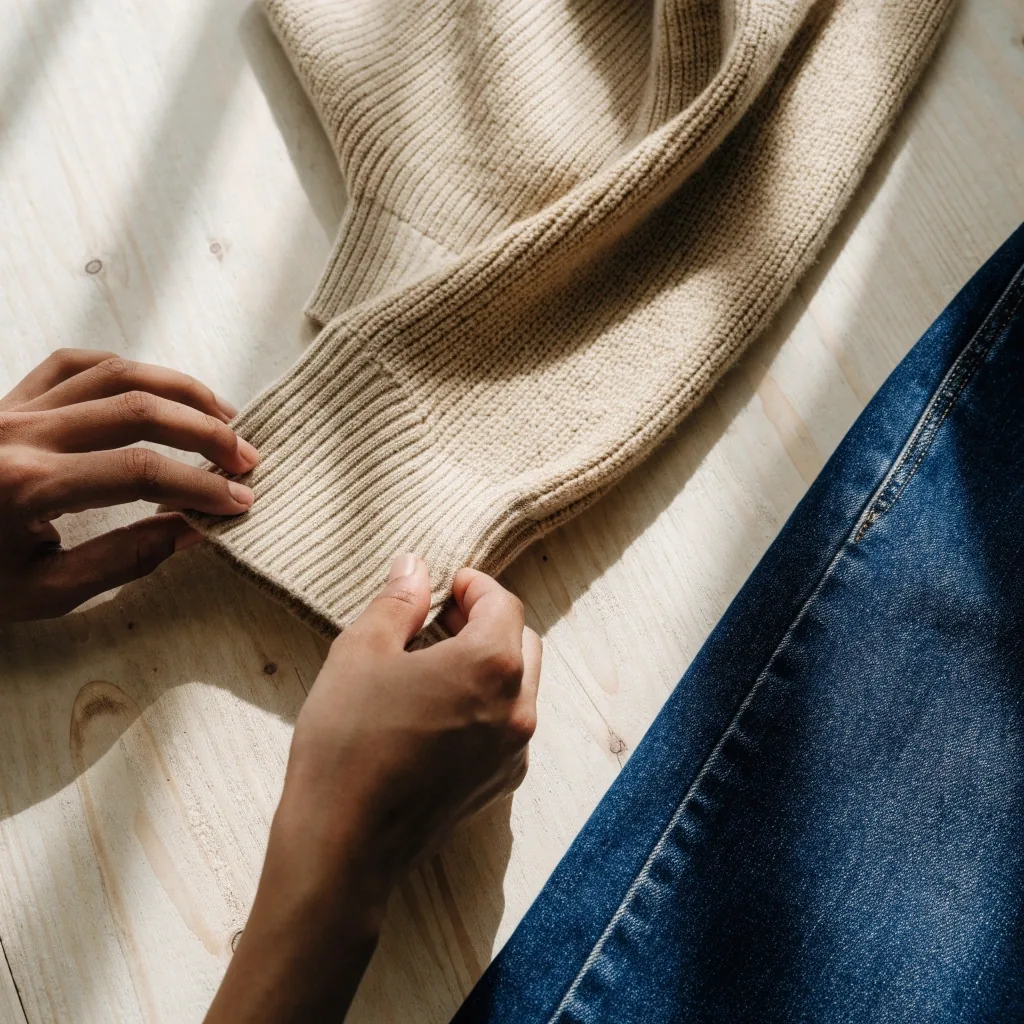
Denim's durability depends on weight and how often it is washed. Heavier denim holds its line and fades visibly, developing character that lighter fabric does not. Lighter denim drapes more and wears out faster at stress points like the inner thigh and the back pocket corners.
Washing less often is the standard advice, and it is mostly about preserving indigo and structure rather than hygiene. When you do wash, cold water and air drying protect the fabric far better than heat. A pair treated this way can stay in rotation for years, which is the entire argument for buying denim well once.
Recycled textiles and what they can do
Recycled fibers have become common in mainstream clothing, and their behavior varies widely. Recycled cotton often has shorter fibers, which can mean faster pilling. Recycled polyester performs closer to its virgin counterpart in many applications. The percentage in a blend matters as much as the fact of recycling.
That is why a claim like "made with recycled materials" tells you very little on its own. The useful questions are which fiber, what share of the garment, and whether the resulting fabric performs. Nazso treats recycling as one factor among several rather than a verdict on quality.
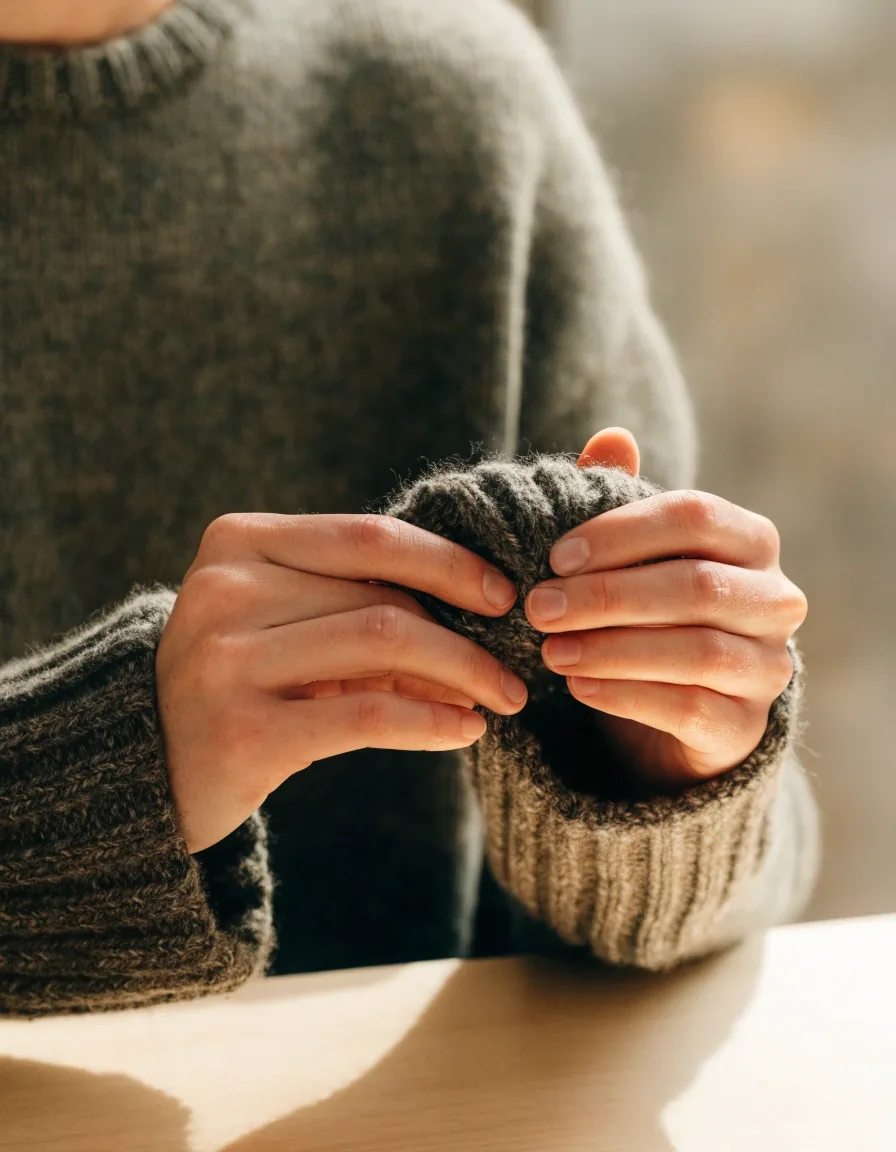
Knitwear read at the yarn: twist, density, and the cuff that will tell you how it wears.
Vegan alternatives and their trade-offs
Vegan leather and fur alternatives have improved substantially, and they solve a real problem for readers who avoid animal materials. The trade-off is usually durability. Many plant-based and polyurethane alternatives wear faster than animal leather, particularly at flex points, so care and rotation matter more.
Stella McCartney's emphasis on vegan fur alternatives is one of the more visible luxury examples, and the brand's stated 93% sustainable materials for its winter 2026 show gives a sense of how far the approach has moved into high-end production. For readers, the practical question remains how a specific alternative material performs in daily use rather than what it is called.
Reading a sustainability claim
Most sustainability language on a label falls into a few categories: material composition, sourcing, production method, or longevity. Composition claims are the most checkable, because they describe what the garment is made of. Sourcing claims are harder to verify and often rest on a supplier relationship you cannot see.
Longevity claims are the ones Nazso weighs most heavily, because a garment that lasts is the most straightforward form of environmental benefit. If a piece is built to survive several years of wear, that is a concrete outcome. If a claim stays vague about what makes a fabric better, it is worth treating as marketing until something specific appears.
- Composition
- Names the fibers. Checkable against the care label and the feel of the cloth.
- Sourcing
- Points to where fiber came from. Harder to confirm without a visible supply chain.
- Production method
- Describes how the fabric was made. Ask which step changed and why it matters.
- Longevity
- Promises the piece will last. The claim with the clearest environmental case.
Washing, drying, and the damage that matters
Most garment damage happens in the wash and the dryer, not in wearing. Heat is the main culprit: it shrinks wool, degrades elastane, fades color, and weakens fibers over time. Cold water and air drying prevent the majority of avoidable wear, and the cost is mostly patience.
Detergent choice matters less than people think, though harsh formulas can strip natural oils from wool. Sorting by fabric type rather than color alone is the more useful habit, since a heavy cotton towel abrades a fine knit regardless of what else is in the load.
Storage and seasonal rotation
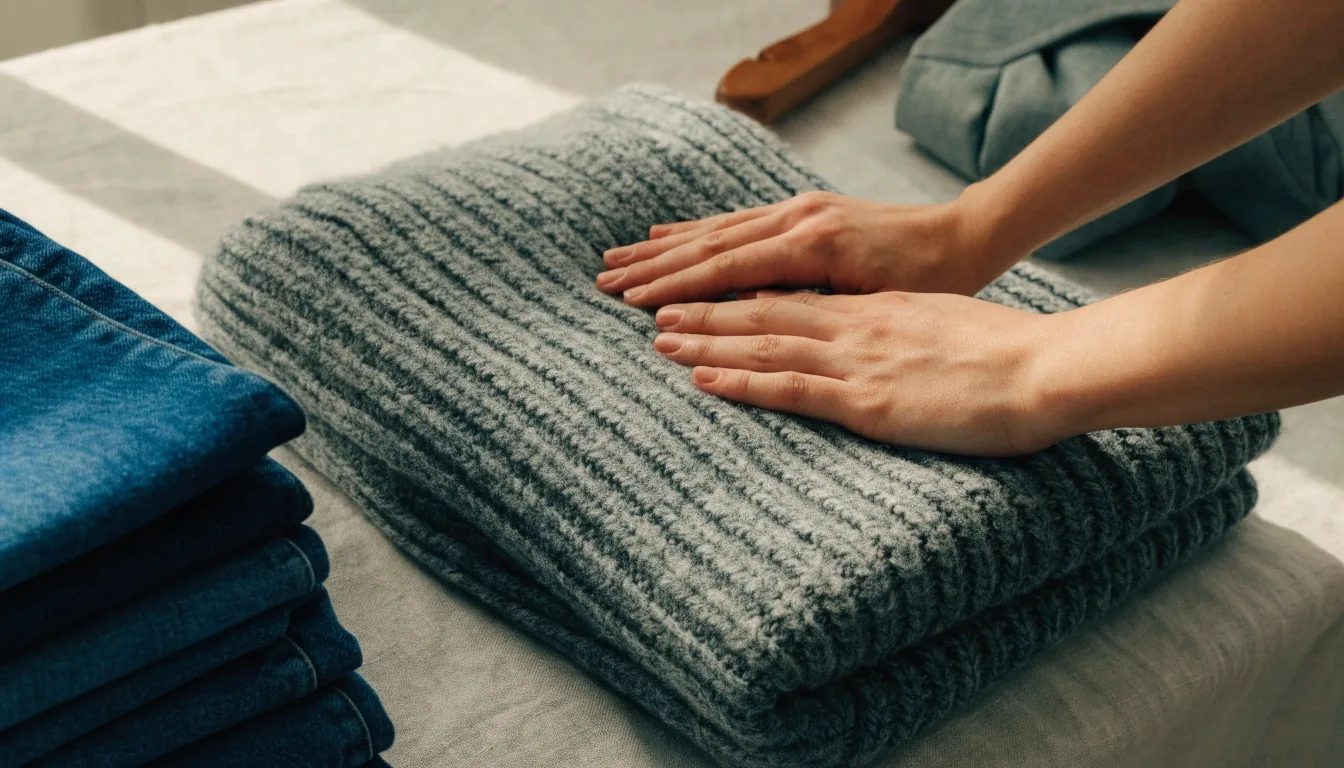
Knitwear folds rather than hangs, since hanging stretches shoulders over months. Structured jackets belong on wide hangers that hold the shoulder line. Denim can be folded or hung, but not compressed for long periods. Rotation is the moment to inspect for moth damage, stretched cuffs, and failing seams.
Repair, alteration, and knowing when to stop
Alteration is often the highest-value intervention available. Taking in a waist or shortening a hem can restore a garment's place in a wardrobe for a fraction of replacement cost. Repair stops making sense when the fabric itself has failed across a large area, or when the cost approaches replacement.
Where this page sits in the issue
Questions readers send us most
Short answers to the practical things people ask after reading the sections above. If something here contradicts your own experience, tell us — corrections are welcome and read carefully.
Send a correctionHow often should wool actually be cleaned? Open
Far less often than most people assume. Wool resists odor and sheds soil slowly, so airing a coat overnight after wear handles most of what a wash would. Clean it when there is a visible mark or a smell that airing will not shift — not on a schedule. Each wash is agitation and heat, and wool does not forget either.
Does a recycled content percentage tell me anything about quality? Open
Partly. The share of recycled fiber in a blend matters, but so does which fiber was recycled. Recycled cotton tends to have shorter fibers and can pill faster; recycled polyester often performs close to its virgin counterpart. Read the percentage together with the fiber name and the way the cloth feels, not on its own.
Is it worth repairing a jacket, or should I replace it? Open
It depends on what failed. A failing seam, a loose button, or a hem that has come down is a small repair and almost always worth doing. If the fabric itself has worn through across a large area, or if the repair cost approaches replacement, that is a different conversation. Outerwear usually justifies more investment because the original construction is harder to replace than the button.
What is the single easiest change that extends a garment's life? Open
Stop using the dryer for anything you want to keep. Heat is what shrinks wool, degrades elastane, fades indigo, and weakens fibers over time. Cold water and air drying are not dramatic interventions — they are just slower. The cost is patience, and the result is a garment that still fits you in five years.
Read the fiber, then read the label
Care is the practical half of this page; the other half is knowing what the words on a label are doing. If you want to keep going, the wardrobe guides walk through building a closet around fabrics that survive, and the brand notes look at how labels describe materials in the first place.
Nazso is an editorial resource, not a shop. Nothing here is for sale, and no page asks you to buy anything. If a claim on this page does not match what you have seen, send a correction — we read them.