
Style Journal · Nazso
The style journal: longer reads on how we dress
What the journal is for
The journal is where we publish pieces that don't fit a trend note: city dressing, seasonal transitions, and longer arguments about how style actually functions. These are the articles for readers who want context rather than a quick list.
Entries here run longer and take a position. They're written for people who already know the basics and want to think through the harder questions, like why a wardrobe stops working or how a city changes what you wear.
Every entry starts from a wardrobe problem rather than a shopping list. That means an article can spend three paragraphs on why a coat stops working before it names a single garment, and it can end without recommending a purchase at all. If you have read a trend note here and wanted the reasoning behind it, the journal is the next step.
City dressing and the constraints that shape it
Dressing for a city is a problem-solving exercise. Walking distance, transit, weather swings, and the mix of settings in a single day all constrain what works. New York is the obvious case, since a day can move from a cold street to an overheated office to a dinner without warning, but the same logic applies in Chicago, Boston, or Seattle with different weights.
Which layering structure survives a long walk and a warm train car without being carried by hand for the second half of the day.
What actually holds up over miles of pavement, and which pairs work only on the days you are not walking far.
How to handle a coat when you are indoors for half the day, and what a lighter outer layer costs you in the cold.
Building for an office, a dinner, and a walk home in the same outfit, and knowing which piece has to do the most work.
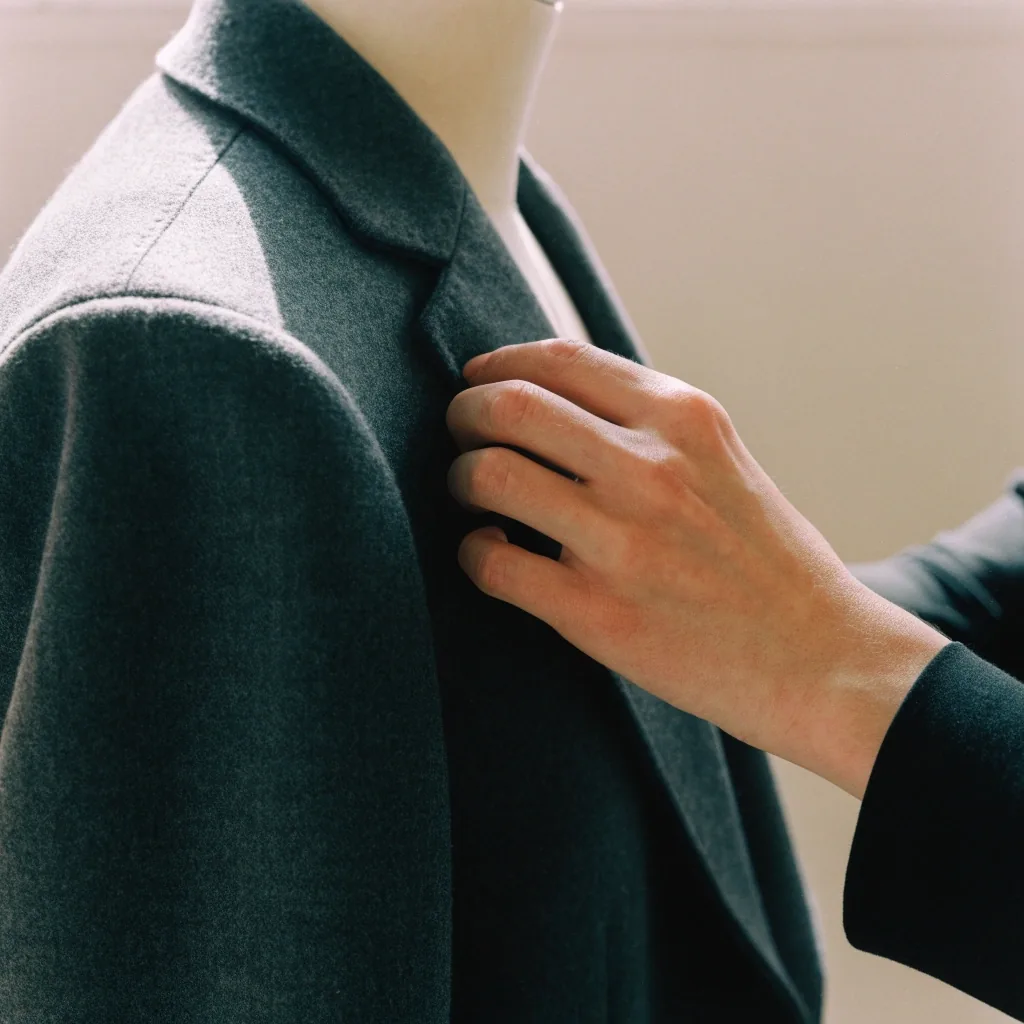
Between seasons, the question is usually removability, not warmth.
The awkward weeks between seasons
The weeks between seasons are the hardest to dress for, because the weather refuses to commit. Early fall in the Northeast and late spring anywhere in the US both produce the same problem: mornings that need a coat and afternoons that don't. Layering solves it, but only if the layers are chosen for removability.
We write about transitions as a specific skill, separate from dressing for a settled season. The pieces that help are usually lighter and more modular than the ones that help in January, and the difference is worth planning for rather than improvising each morning.
A useful test when you are deciding what to keep out of storage: can you remove any single layer in a warm room and still be wearing a complete outfit? If the answer is no, the layer underneath is carrying too much and the transition weeks will be uncomfortable. That test shapes most of what we publish about shoulder seasons, from knitwear weights to the difference between a light coat and a heavy cardigan.
What to plan for
Layers chosen for how easily they come off, not just how warm they are. Mornings and afternoons in the same outfit.
What to leave until January
The heaviest pieces, unless you have somewhere to put them the moment the day warms up. Planning beats improvising.
Styling experiments and what they teach
Some journal pieces are experiments: taking one piece and building several outfits around it, or testing whether a trend holds up outside its original context. The point isn't to produce a formula. It's to show the reasoning, including the attempts that don't work.
Failure is genuinely informative here. An outfit that looks wrong usually reveals which proportion or fabric was carrying the whole thing, and that knowledge transfers to everything else in a wardrobe. We write those up honestly rather than presenting only the results that worked.
An experiment usually starts with one piece and a question: what is this actually doing in an outfit, and what happens if the thing next to it changes? We build three or four versions, keep the notes on each, and publish the reasoning whether or not a version held up. When a piece fails in three different contexts, the writing is about the piece rather than the styling.
- ONEPick one piece and state the question the test is meant to answer.
- TWOBuild several outfits around it and change only one variable at a time.
- THREEKeep notes on the versions that look wrong, not only the ones that work.
- FOURPublish the reasoning, including where the experiment failed.
Context that makes trend coverage usable
Fashion coverage tends to move fast and explain little, which leaves readers with a list of items and no framework. The journal takes the slower route: what a season is arguing, which houses are making the argument, and how it reaches ordinary clothing.
This also means pushing back on some of the coverage itself. When a term gets overused, or a claim doesn't hold up, we say so. The editorial position of this site is that readers can handle nuance, and that explaining the reasoning is more valuable than summarizing a consensus.
If you want the shorter form, the trend notes cover what changed and where it shows up. The journal is where we slow down and argue about whether the change means anything beyond one season.
Read the latest trend notesThe longest-running thread in the journal
Pieces that survive a decade usually do so because of fabric and fit rather than trend alignment, and the decisions that matter are made at purchase and in care, not in styling.
We return to this because it's the counterweight to seasonal coverage. Trends are worth understanding and worth trying, but they sit on top of a foundation that changes slowly. Articles here tend to examine that foundation: how a coat gets chosen, how a knitwear rotation gets maintained, what makes a piece worth altering rather than replacing.
- How a coat gets chosen, and what decides it stays in rotation
- How a knitwear rotation is maintained across a cold season
- What makes a piece worth altering rather than replacing
Questions we've taken up
Some journal entries start with a question from a reader. Those questions tend to produce the most concrete writing, because they come with real constraints attached.
How do you dress for a workplace with no dress code? Open Close
We start with what the room already wears and where the written rules are silent, then work out a baseline that reads as intentional rather than underdressed. The article covers the few pieces that carry that job and how to test an outfit before you commit to a whole wardrobe around it.
Can a trend work in a warmer climate? Open Close
Often yes, but not in the fabric the trend was shown in. The useful question is what the trend is doing structurally, and whether a lighter version of it carries the same idea through a warm month.
How do you tell a good jacket from an expensive one? Open Close
Fit at the shoulder, how the lining is set, and whether the seams hold their line when the jacket is closed. Price is a weak signal on its own, and the article explains where the two usually separate.
Where do I send a question of my own? Open Close
Send it to the editors through the contact page. We don't answer everything, and we don't publish responses that amount to shopping advice, but the questions that involve a genuine wardrobe problem are the ones that turn into articles.
Send a question, or keep reading
The journal grows slowly, and most of what appears here starts as a question about a real wardrobe problem. If you have one, send it to the editors. In the meantime, the trend notes and the wardrobe guides cover the shorter, more practical end of the same ground.
- Nazso 452 W Broadway, New York, NY 10012
- Editors [email protected]
- Telephone +1-212-555-0198
- Reading room hours Monday–Friday, 9:00 AM – 6:00 PM